
Siemens delivered a strong margin performance and also reported high other income to beat consensus in the January-March quarter (Q2) of FY24 (the company's year-end is September 30). In addition, it has opted to demerge the energy vertical with a 1:1 award of shares in the newly demerged entity which will be listed by the end of this year (CY25).

The market capitalisation (m-cap) of nine of the country's top-10 firms diminished by Rs 67,964.18 crore during the week, with oil and gas major ONGC bearing the maximum brunt.

India, with m-cap of about $1.6 trillion, is ahead of Switzerland.

Investors' wealth has jumped by a massive Rs 9.41 lakh crore during three successive days of gains in the domestic equity market. The Sensex and the Nifty continued their upward journey for the third straight session on Wednesday, as the BSE benchmark surged nearly 1,148 points to breach the 51,000-level and the NSE benchmark index recaptured the 15,200-mark by rising 326.5 points. At the closing bell, the 30-share Sensex was up 1,147.76 points or 2.28 per cent at 51,444.65, the biggest single-day rise since February 2.

JM Financial on Wednesday said it had a "careful and detailed review" of the Reserve Bank's order imposing restrictions on the company's financing business and asserted that there was "no material deficiencies" in its loan sanctioning process. The Reserve Bank on Tuesday imposed restrictions on JM Financial Products Ltd after it found the company indulged in various manipulations, including repeatedly helping a group of its customers to bid for various IPOs (initial public offerings) by using loaned funds. "After careful and detailed review of the order issued by the RBI on the action against JM Financial Products Ltd, we strongly believe that there have been no material deficiencies in our loan sanctioning process.

Shares of Avenue Supermarts, which owns and operates the DMart stores, hit a two-year high of Rs 4,710.15 as they surged nearly 6 per cent on the BSE in Thursday's (April 4) intraday trade after reporting strong revenue growth in the January-March quarter (Q4) of the previous financial year (FY24). DMart, in the Q4FY24 pre-quarter update, said the company reported 20 per cent growth in standalone revenue from operations at Rs 12,393 crore, as against Rs 10,337 crore in the third quarter (Q3) of 2022-23 (FY23), driven by a 7 per cent growth in revenue per store and a robust 13 per cent year-on-year (Y-o-Y) increase in store additions. In Q3 of 2021-22, the company reported revenue of Rs 8,606 crore and in Q3 of 2020-21, it posted revenue of Rs 7,303 crore.

Notwithstanding concerns about lofty valuations, smallcaps recorded their most significant monthly gain in nearly three years in November. The National Stock Exchange Nifty Smallcap 100 finished the month with a 12 per cent gain, the most since February 2021 when it rose by 12.2 per cent. After declining by 4.1 per cent in the preceding month, the Nifty Midcap 100 rose by 10.4 per cent, the most since July 2022.

Defence exports grew 33 per cent in the calendar year 2023 (CY23) to around Rs 21,083 crore while domestic defence orders serviced by listed companies were Rs 48,000 crore. The sector is poised for steady growth. Budgeted domestic capex is likely to hit Rs 3 trillion per annum, and exports could reach $6 billion by FY29.

Life Insurance Corporation of India (LIC) February 8 for the first time ever crossed the Rs 7 trillion market capitalisation, as the stock price of state-owned insurer hit a new high of Rs 1,144,45, on rallying 10 per cent on the BSE. The board of directors of the Corporation are scheduled to meet today i.e. February 8, 2024, to consider a proposal for declaration of interim dividend for the financial year 2023-24 (FY24). The board will also consider and approve the unaudited financial results for the quarter and nine-month period ended on December 31, 2023.

Dabur's performance in the July-September quarter of the current financial year (Q2FY25) was weak but in line with consensus. Consolidated revenue declined 5 per cent year-on-year (Y-o-Y) due to a temporary adjustment in General Trade (GT) inventory. Indian revenue declined 7.6 per cent, while international business grew 13 per cent Y-o-Y in constant currency (CC) terms.

Ulhas Joshi, Head -- Sales, Rank MF, a mutual fund investment platform, answers your queries.

Dalal Street investors became richer by more than Rs 16.36 lakh crore this year as the equity market scaled new highs despite persistent geopolitical uncertainties and inflation worries. Analysts attributed better macroeconomic fundamentals, the confidence of retail investors and foreign investors investing again in the domestic equities towards the latter half of 2022 as the key factors that led to the outperformance of the Indian market in comparison to many other stock markets worldwide. During the initial part of the year, markets were jolted by the Russia-Ukraine war.

Equities went into a tailspin on Wednesday after the Reserve Bank surprised the market with a mid-cycle rate hike in a bid to tame soaring inflation.

Tata Motors surpassed Maruti Suzuki (India) (MSIL) to become the most-valuable automobile company, in terms of market capitalisation (mcap), after a gap of seven years. With this, the company's stock hit a new high on the BSE on Tuesday (January 30). The combined mcap of Tata Motors (Rs 285.51 crore) and Tata Motors DVR (Rs 29,119 crore) stood at Rs 3.146 trillion.

'Subject to any worldwide economic collapse.'

These firms owe Rs 13 trillion to lenders and account for 55% of all non-financial corporate debt.

More than 60 small and medium enterprises (SMEs) are expected to tap the market in one year to raise equity funds for supporting their business requirements, a BSE top official said on Wednesday. These companies will get listed on the exchange's SME platform, Ajay Thakur, head of BSE SME and Startup told PTI. Last year, only 16 SMEs had tapped the initial public offering (IPO) route and raised Rs 100 crore.
The froth in the small and midcap (SMID) space is limited to a few pockets, but regulatory scrutiny could lead to sustained volatility, observe India's top-drawer wealth managers. They add that they have been advising clients to reduce their exposure to smallcaps. Anand Rathi Wealth, which manages investor wealth through mutual funds (MFs), reports that its exposure to smallcap stocks, both through MFs and directly, has decreased by nearly 7 percentage points in the past few months, now standing at 23 per cent.
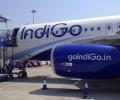
Fuelled by robust market demand and higher revenues, InterGlobe Aviation on Thursday flew into the profitability zone, raking in a net profit of Rs 919.2 crore in the March quarter. The parent of the country's largest airline IndiGo, which had faced turbulence last year, had a net loss of Rs 1,681.8 crore in the three months ended March 2022. Reflecting the bullishness in the aviation market, the carrier has forecast a 5-7 per cent rise in Available Seat Kilometres (ASK), an indicator of seat capacity, in the June quarter.
The market capitalisation of BSE-listed companies on Thursday crossed the historic Rs 200 lakh crore mark for the first time, driven by a continuous rally in the broader market. Riding high on the bullish investor sentiment, the market capitalisation of BSE-listed companies reached a record Rs 2,00,47,191.31 crore at close of trade. The 30-share BSE index closed the day with a gain of 358.54 points or 0.71 per cent at its lifetime peak of 50,614.29. This is the fourth consecutive day of gains for the markets.

The number of companies had touched a low of 792 in July 2020 amid heightened uncertainty because of COVID-19.

TCS, HDFC Bank, Infosys and Kotak Mahindra Bank were the other firms in the top-10 list which witnessed a rise in their market capitalisation. On the other hand, HUL, HDFC, Bharti Airtel, ITC and ICICI Bank finished with losses.

The rally in the equity markets in the second half of 2023 has led to a sharp surge in the cutoff for stocks to qualify as largecaps and midcaps. On the latest list put out by the Association of Mutual Funds in India (Amfi), the smallest largecap stock now has a market capitalisation (m-cap) of Rs 67,000 crore, 35 per cent higher than in July 2023. In the case of midcaps, the cutoff has surged 26 per cent to Rs 22,000 crore.

After selling brands like Pulsar, Boxer, Platina and RE in over 70 countries, Bajaj Auto plans to enter Thailand this year followed by Brazil next year.
Reliance Industries on Tuesday became the country's most valued company, pushing IT major TCS to second spot in the domestic market capitalisation chart.

Stock market investors became poorer by Rs 8.30 lakh crore as equities continued their slide for the sixth consecutive day on Friday. The BSE Sensex has tumbled 1,855.58 points or 3 per cent since February 16. During this period, the combined market capitalisation of BSE-listed firms has tanked Rs 8,30,322.61 crore to reach Rs 2,60,00,662.99 crore. "The domestic market is broadly demonstrating a lack of confidence, registering its sixth consecutive day of losses despite global markets turning green.

'Such big falls are quite frequent these days, so do not try to time this market.' 'Use big dips to accumulate quality stocks.'

Mahindra & Mahindra on Wednesday posted a 20 per cent increase in its consolidated net profit at Rs 3,283 crore for the first quarter ended June 30, 2024. The Mumbai-based company had reported a profit after tax of Rs 2,745 crore in the year-ago period. Revenue rose 10 per cent year-on-year to Rs 37,218 crore as compared to Rs 33,892 crore in the June quarter of last fiscal, the company said.

From the Sensex pack, Larsen & Toubro jumped 4.26 per cent to emerge as the biggest gainer, followed by IndusInd Bank, Tech Mahindra, State Bank of India, HCL Technologies, Power Grid, NTPC, Axis Bank, Kotak Mahindra Bank, HDFC Bank and Wipro. Mahindra & Mahindra, Infosys, UltraTech Cement and Hindustan Unilever were the major laggards.
While CIL, HDFC Bank, SBI, ICICI Bank and HDFC saw rise in their market cap, TCS, RIL, ONGC, ITC and Infosys witnessed fall in their valuations for the week ended April 25.

The hospitality industry has seen plenty of interest since the catastrophic impact of the pandemic, which led to losses in FY21. The hotel industry market cap has more than tripled since 2019 on the combination of a strong earnings rebound and positive surprises, as well as three recent listings. The industry has good tailwinds. The anticipation is, demand for rooms will outrun supply for a few years despite capacity expansions.

The total market valuation of all listed firms at the BSE had first hit Rs 100 trillion level on November 28, 2014.

Sluggish corporate earnings, lacklustre global markets, FPI and slowdown concerns have played spoilsport for the markets.

'If you take any ministry of defence project, Nibe is up there, getting orders.'

The three year lock-in period enables ELSS fund managers to invest in high conviction stocks for a long period of time because of relatively less redemption pressure, says Dwaipayan Bose

Tata Sons chairman N Chandrasekaran is learnt to have discussed the engagement of outgoing TCS MD and CEO Rajesh Gopinathan with the group beyond September 15 in an advisory role, according to sources from Tata Group. Tata Sons and IT behemoth Tata Consultancy Services declined to comment on the development. Tata Group sources, who did not wish to be identified, told PTI that there have been preliminary discussions between the two as the group needs reliable and experienced hands with its diversification into various technology domains.

India's inclusion in JP Morgan's bond index can channel billions of dollars into India. How will the government securities market handle it?

Reliance Industries Limited is the country's most valued firm with a m-cap of Rs 9,17,953.13 crore followed by TCS Rs 8,04,980.33 crore.
